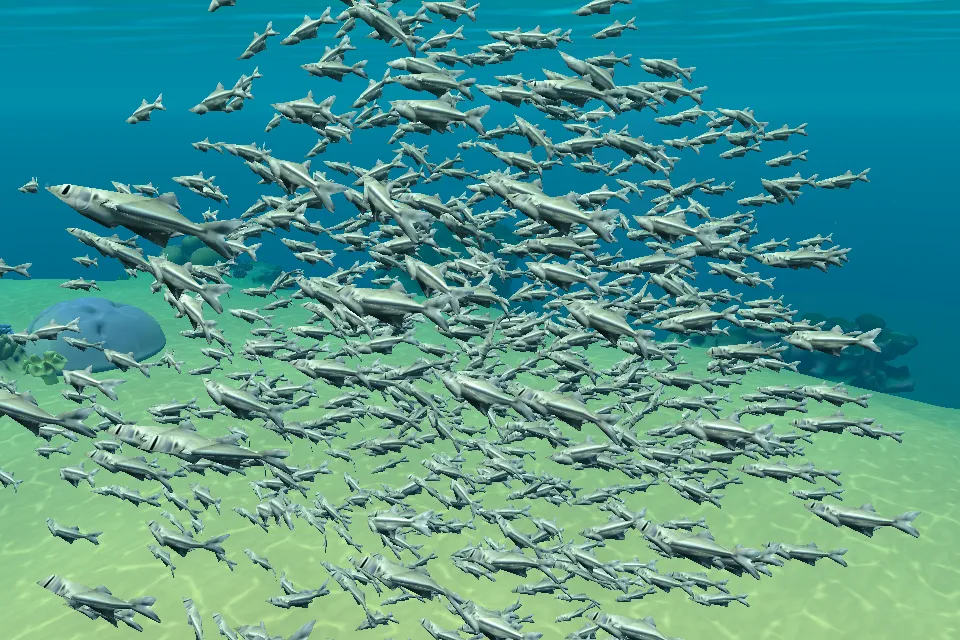
Silversides
Hardyhead silverside
Small, silvery and numerous: the classic flashing shoal.
Life in the water
Simple rules for every fish, a mind for every school, and a gentle but real food chain.
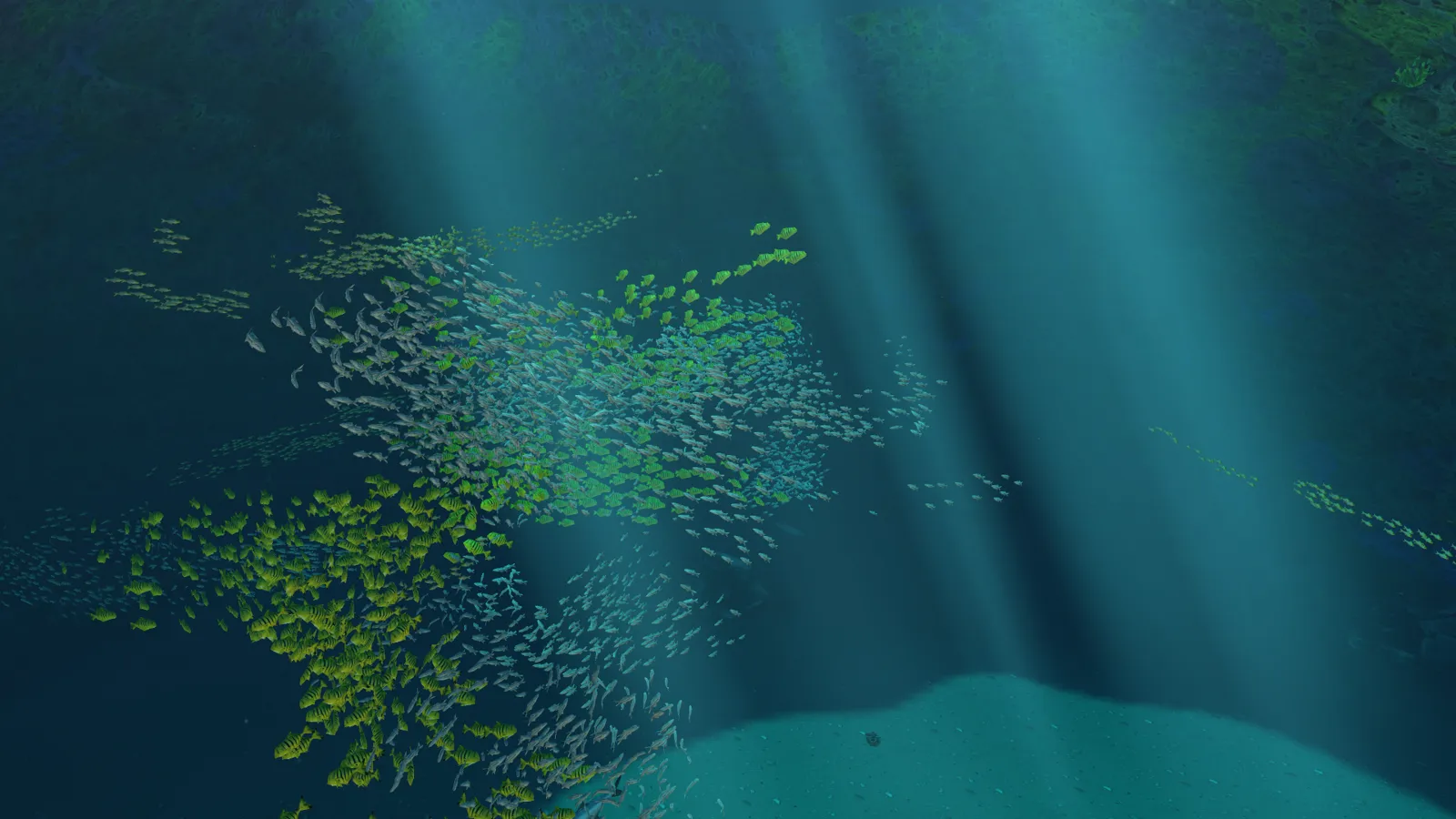
Schools
Every fish keeps a little space from its nearest neighbours, swims the way they swim, and stays with the group. On top of that, fish move like real fish: they stay mostly level, bank into turns, beat their tails in time with their speed, and no two are quite alike.
Several schools share the water. They part around each other, and a straggler can be swept along by another school before heading home.
Minds
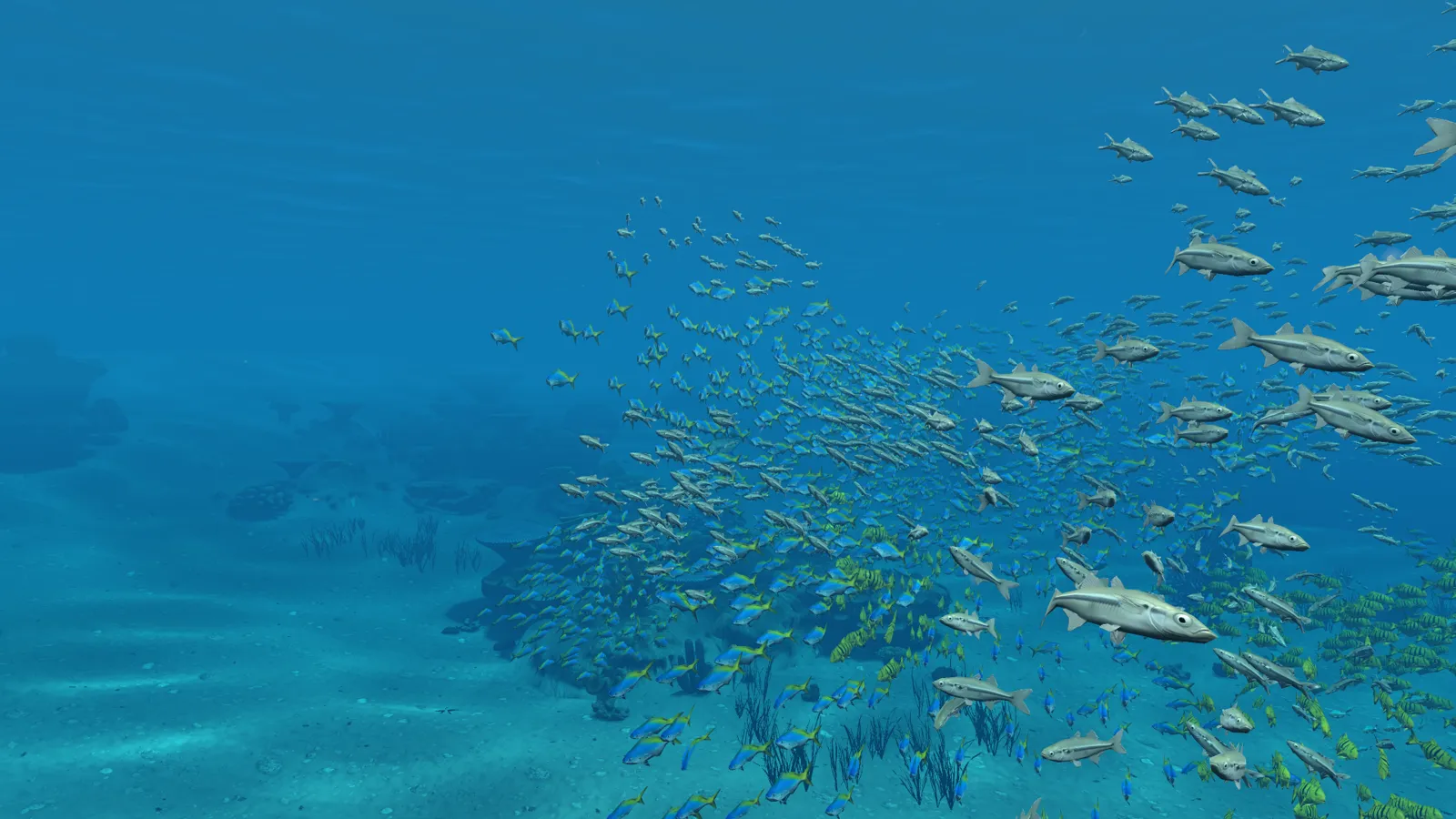
Every school has a mood (cruising, alarmed, calm, sleeping or playful) and a mind that plans its next move: explore, rest under cover, regroup after a scare, keep away from a predator, forage, or answer your commands.
Fish get frightened and tired. Tired schools rest, and bored schools go off to ride the currents. Schools take turns resting, each tiring at its own pace, so the water never goes still all at once.
Presence
Your head, body, hands and controllers are physical things in the water, and the fish swim around them. Only fast movement frightens them, and the fright spreads through the school as a wave. Hold out a calm, open hand and a few curious fish come over to hover nearby before going home.
Hunger
Fish grow hungry over a few minutes. Feed them, and the nearby fish take turns darting out for the flakes while a hungry school a few metres away notices and comes over. Fed fish lose interest and rest; later they grow hungry again and forage along the currents. The fish never need you.
Predators
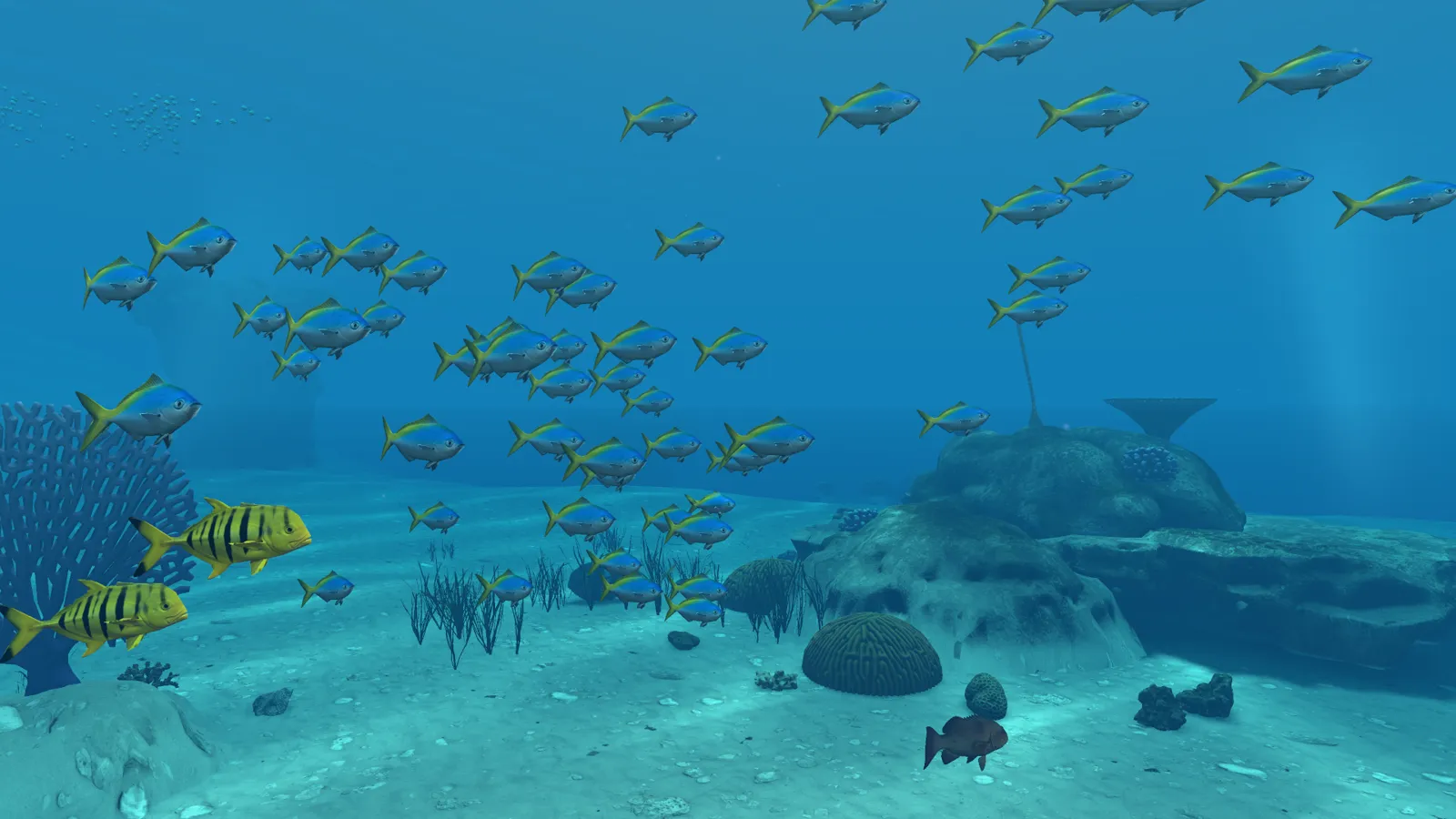
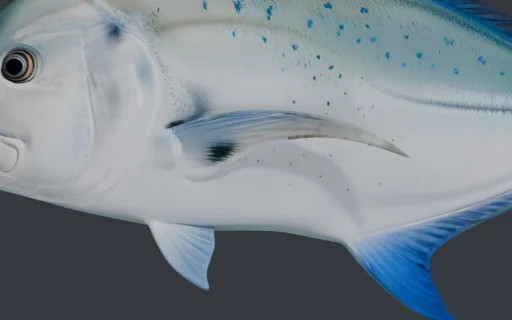
Fire a hunter from the science gun and it forms out of light. Schools open a clear space around a patrolling bluefin trevally and close behind it. When it grows hungry it darkens and rushes a straggler. Most rushes miss as the fish split around its mouth, but some end in a flurry of silver glints.
The coral trout ambushes from cover, and reef fish dive for shelter when a hunter comes near. A quick hand sends a predator off, and it leaves alone any school you're commanding. Sharks, though, are curious: a blacktip will swim right up for a look at you.
The cast
Every species is modelled from reference photographs of the real animal, with its own size, its own way of schooling, and its own place in the food chain.
Hardyhead silverside
Small, silvery and numerous: the classic flashing shoal.
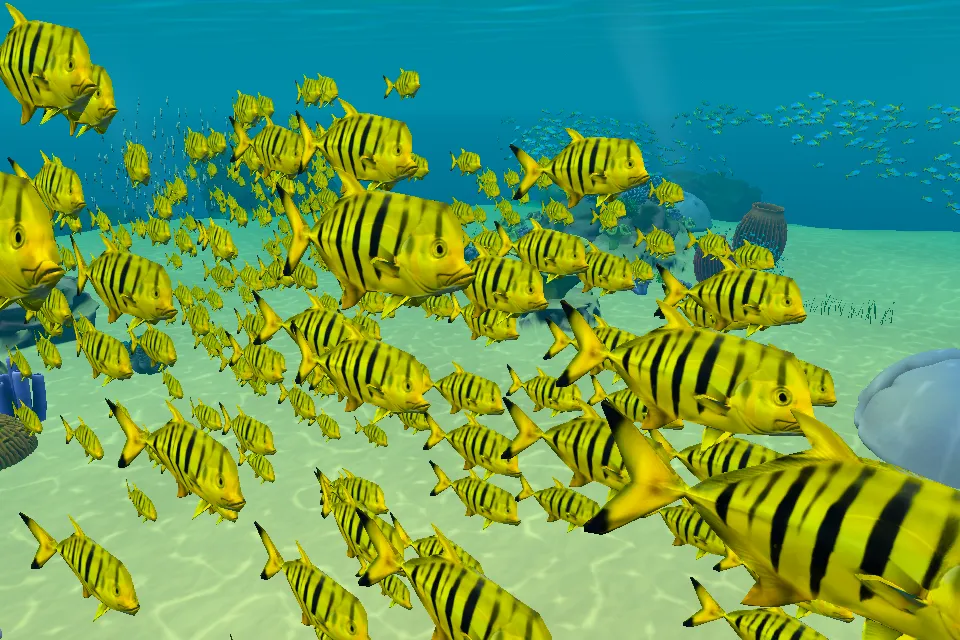
Young golden trevally
Gold with black bars, and too big for the bluefin trevally to eat.
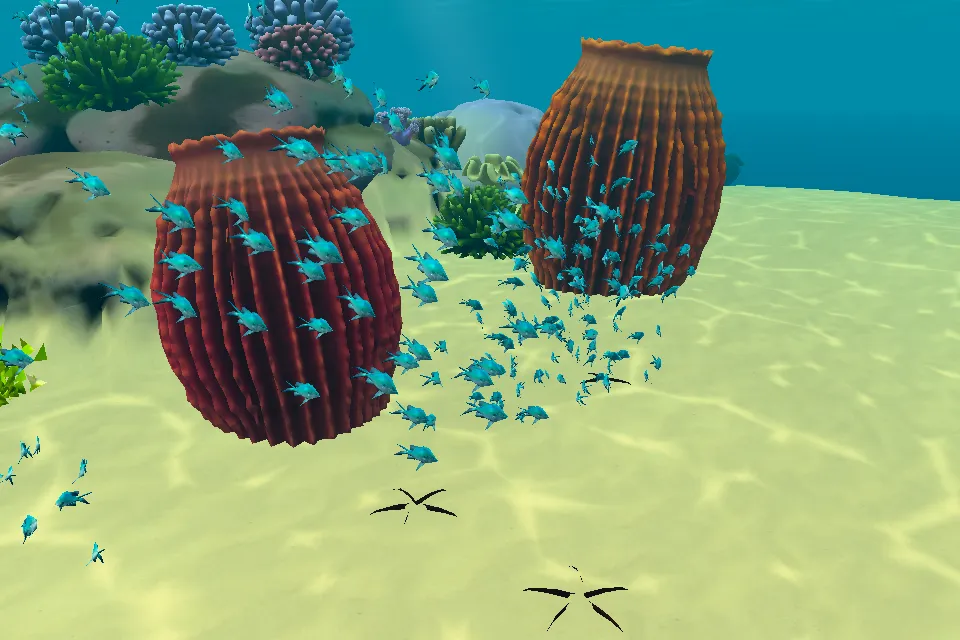
Blue-green chromis
Bright little fish that dive for cover when a hunter comes near.
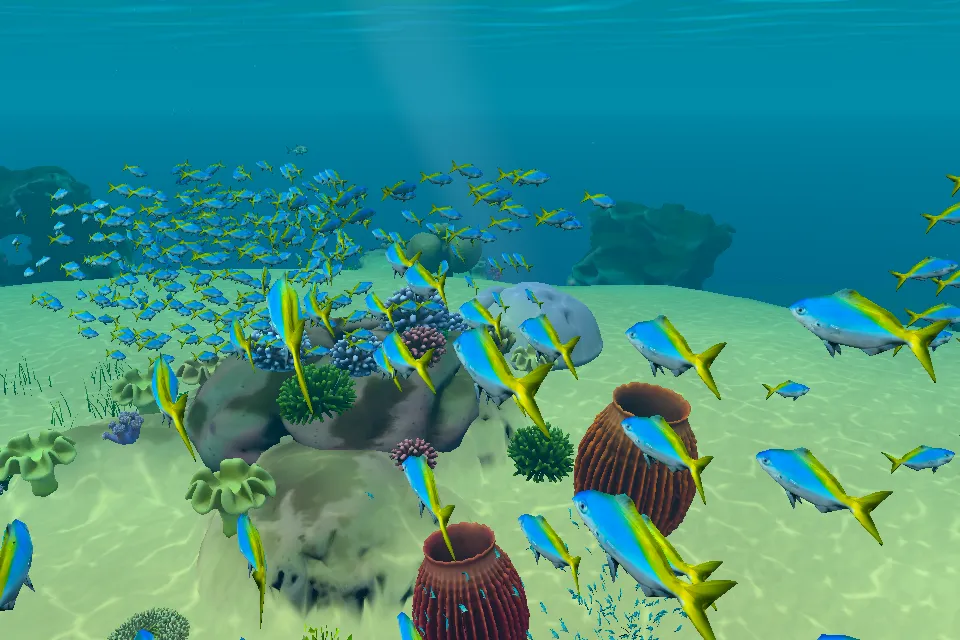
About 20 cm
Fast, tightly aligned open-water schools, blue with yellow backs and tails.
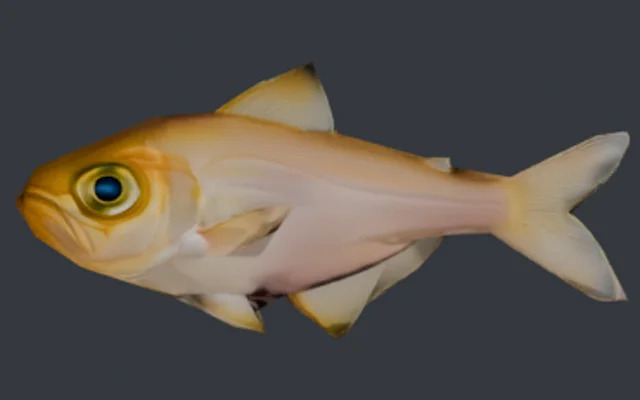
About 9 cm
Golden-headed cave fish that form tight, quick-turning schools.
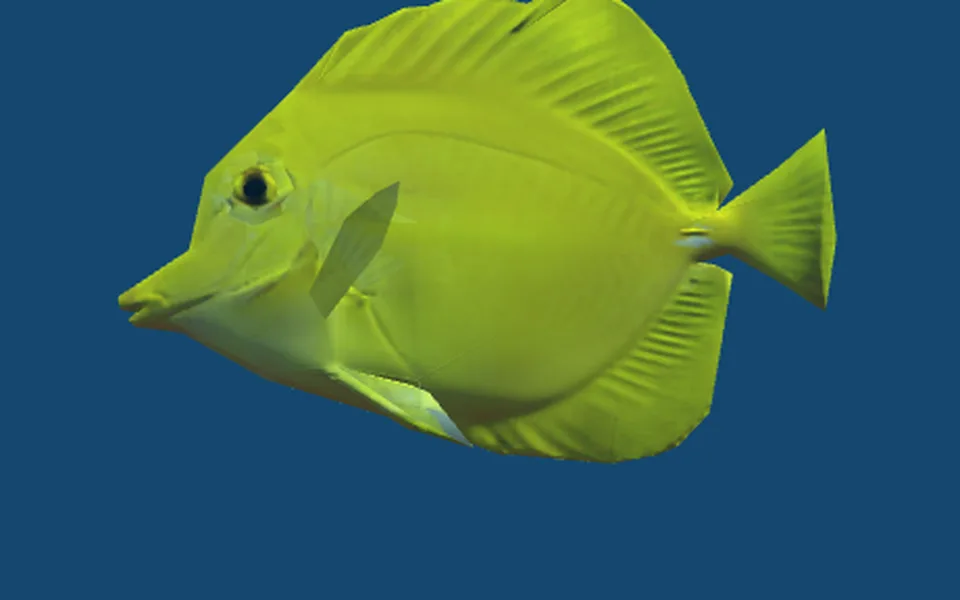
About 16 cm
A flock of pure lemon yellow, grazing the reef.
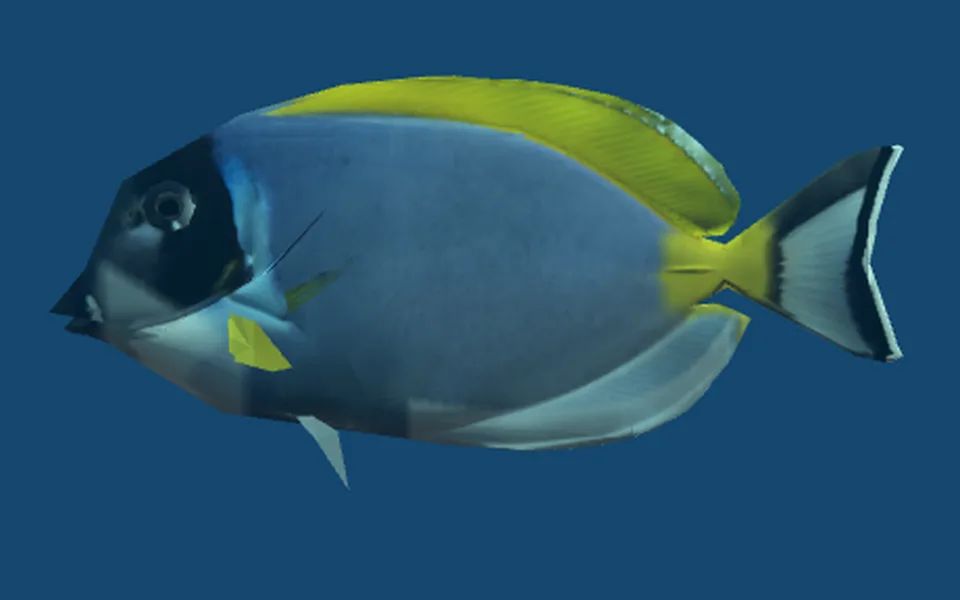
About 20 cm
Soft blue with a black face and a yellow back.
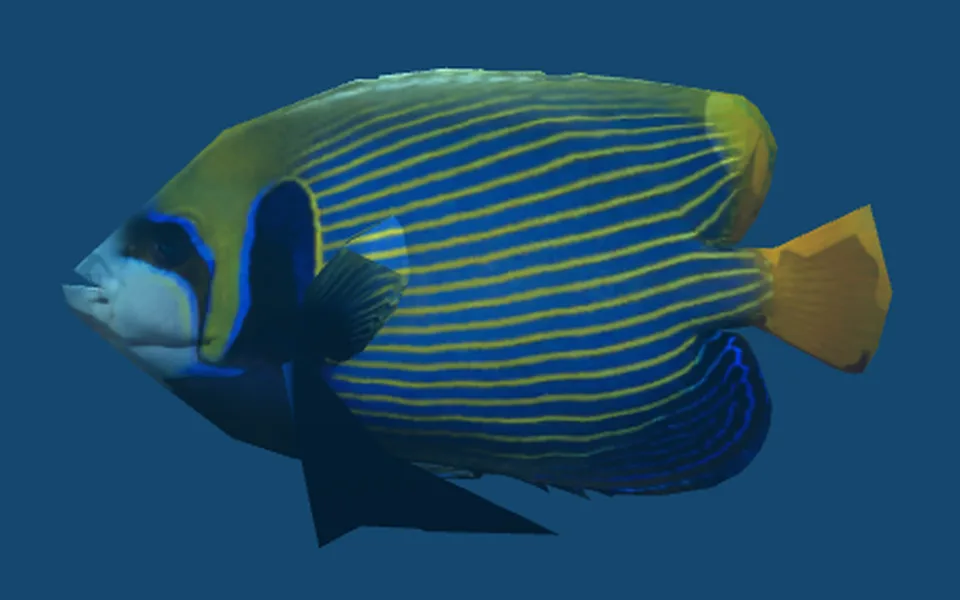
About 25 cm
Royalty in blue and gold pinstripes.
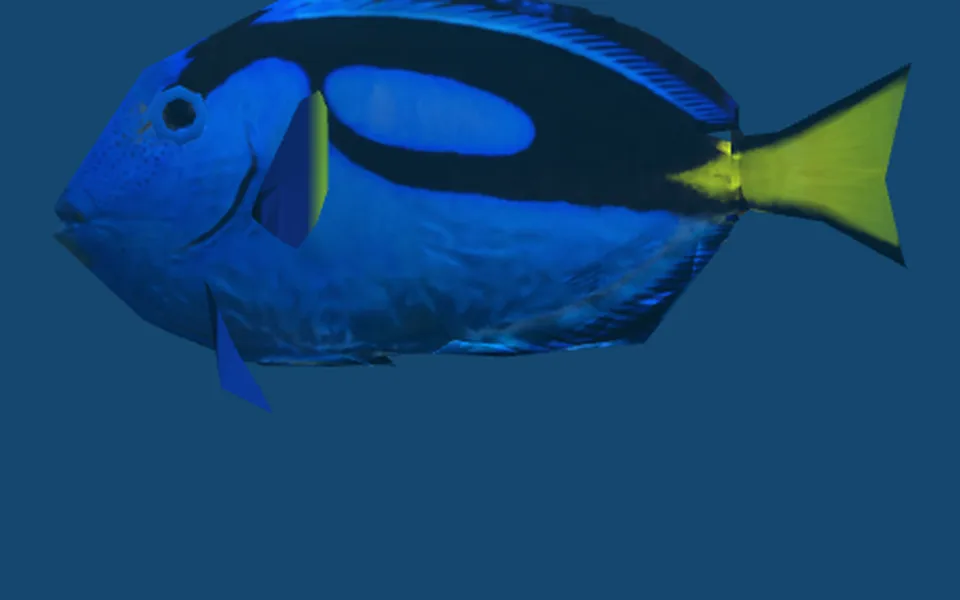
About 22 cm
Electric blue with a yellow tail.
About 18 cm
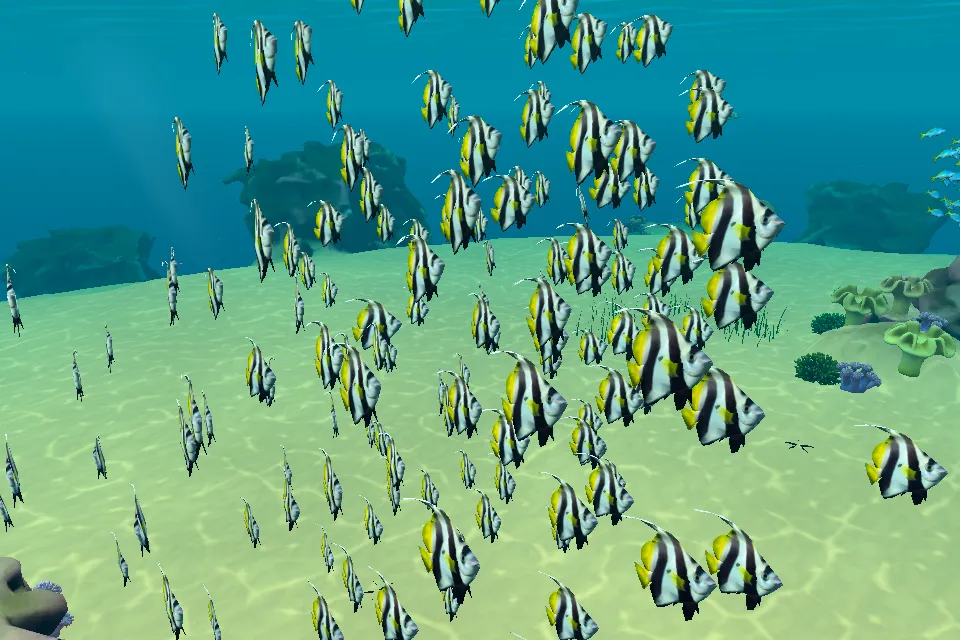
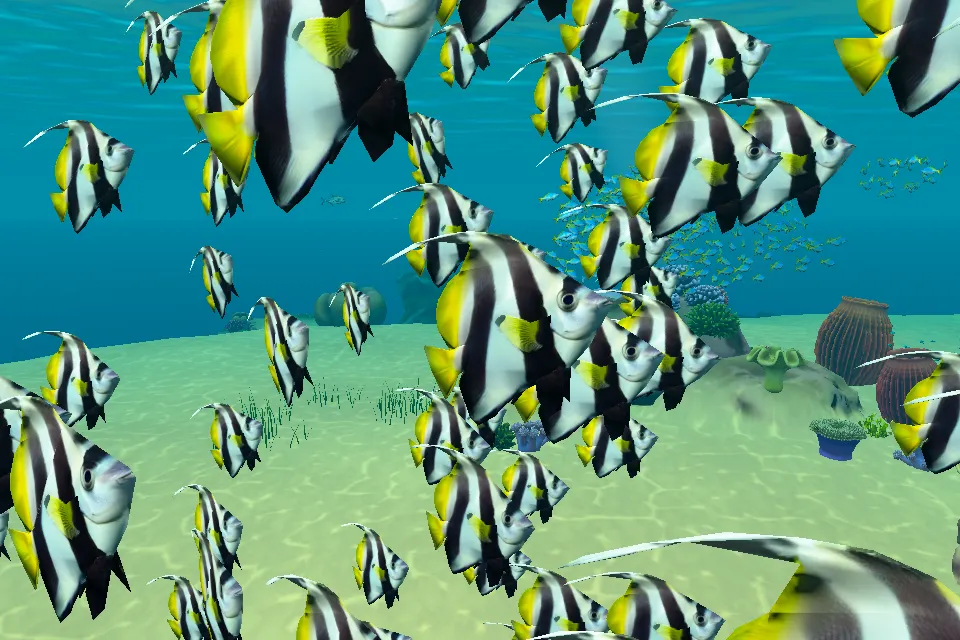
White discs with black bands, yellow fins and a long white banner. They school slowly and loosely.
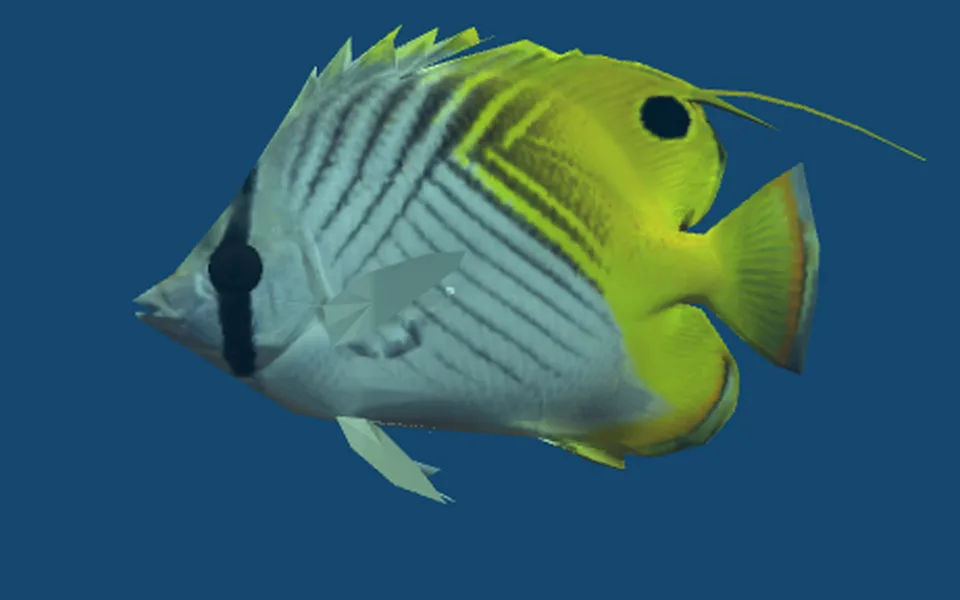
About 20 cm
Yellow and silver, trailing one fine thread from its back fin.
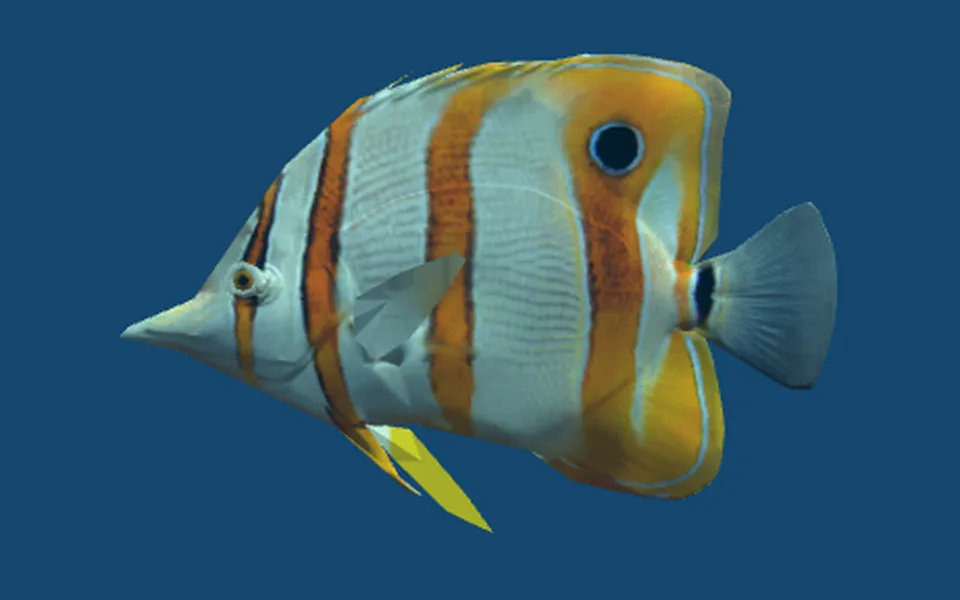
About 18 cm
Copper bands and a long, tweezer snout.
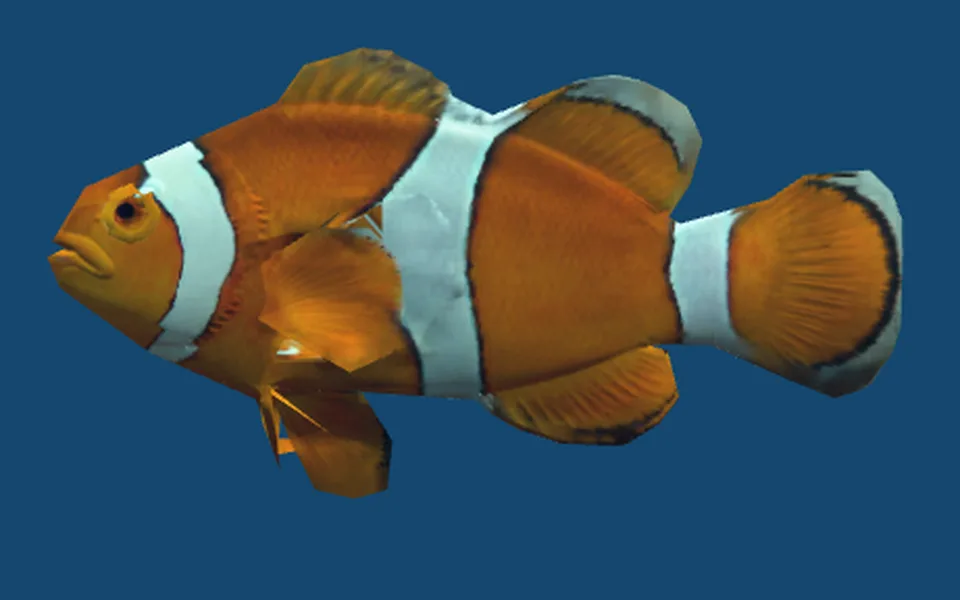
About 9 cm
You know this one.
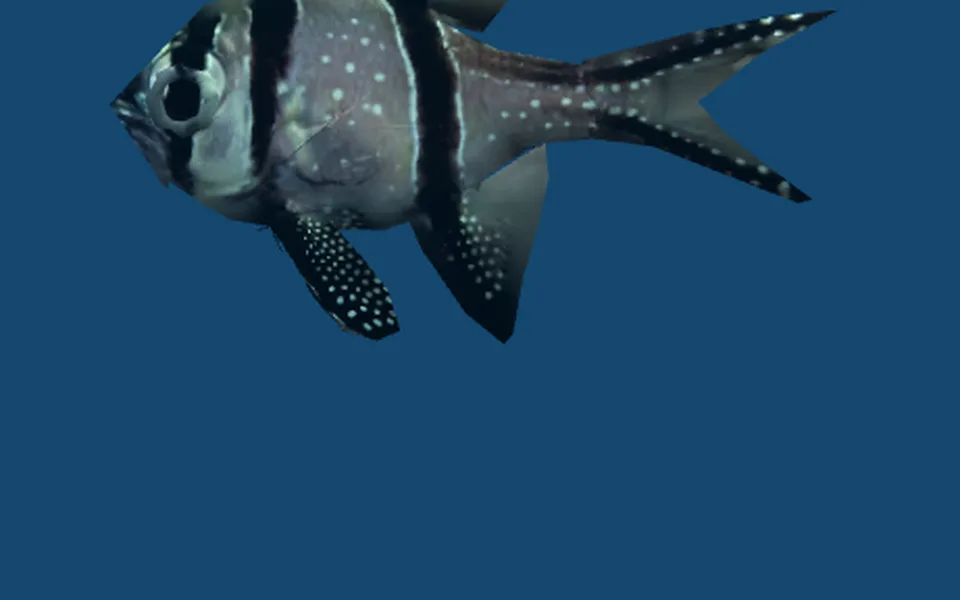
About 7.5 cm
Tiny, spotted, and dressed in black and silver.
About 45 cm
A pursuit hunter that darkens when hungry and strikes in bouts.
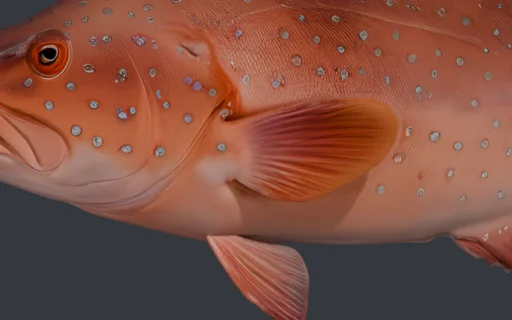
About 40 cm
An ambusher that waits by cover beneath a school, bursts upward, and prowls between hiding spots.
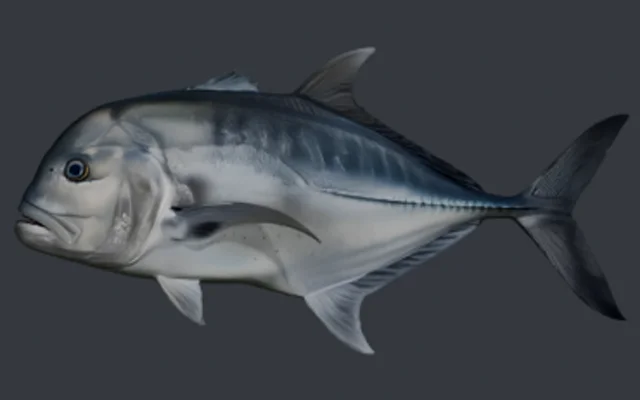
About 1.2 m
The grotto's big pursuit hunter.
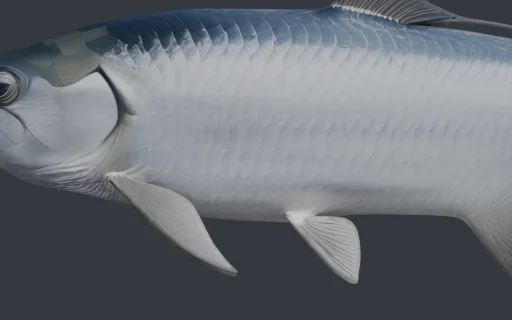
About 1 m
Waits nose-up under schools, and rises to the surface to gulp air.
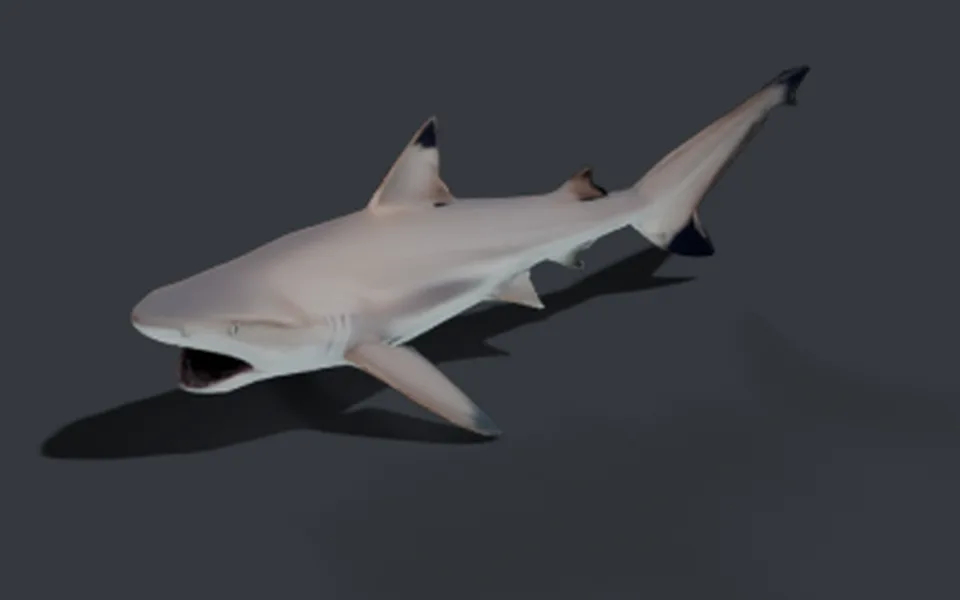
About 1.1 m, the young 85 cm
Never stops swimming. It cruises its beat, investigates, strikes, and swings by for a look at you.
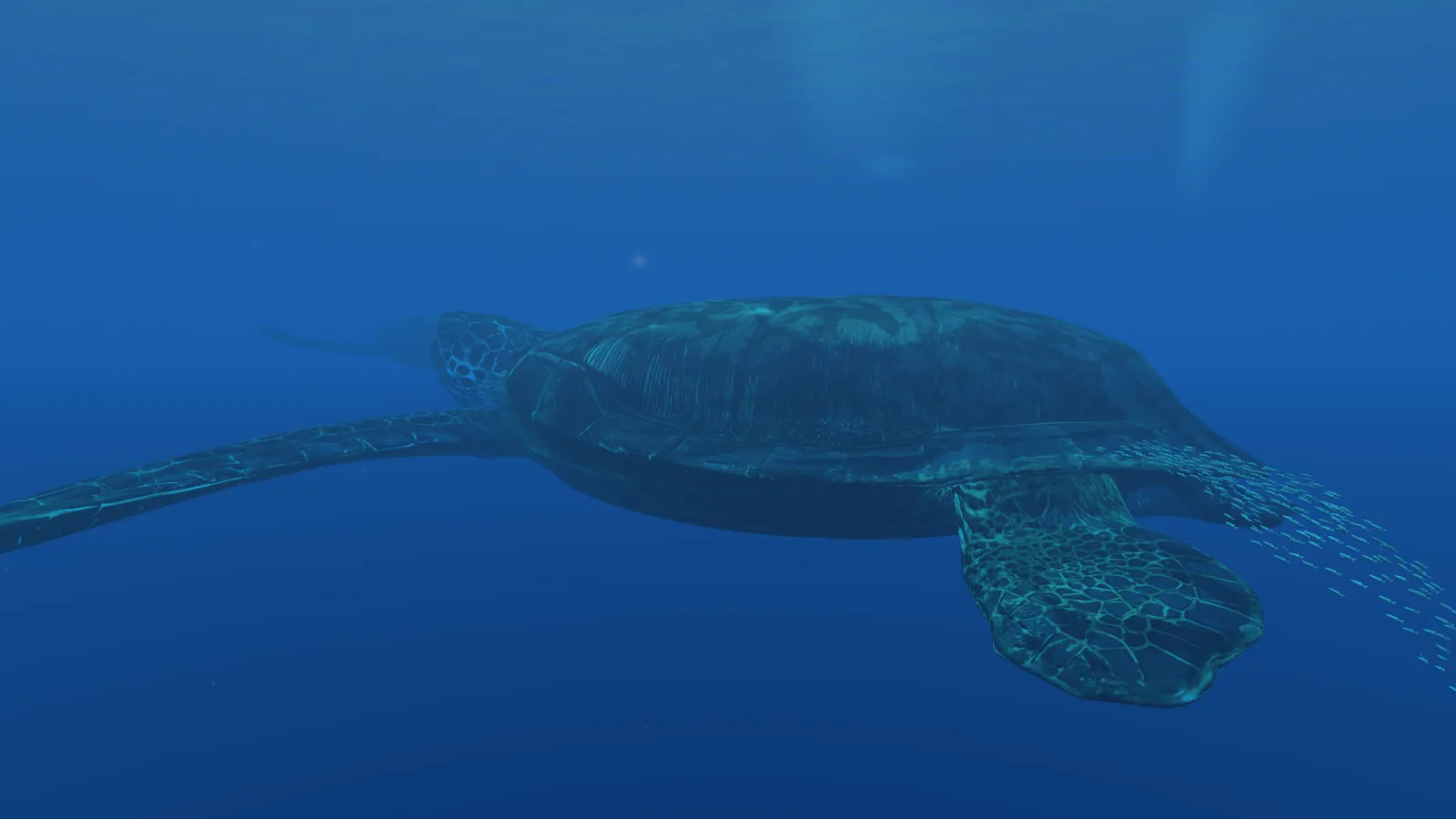
5 to 15 m wide
A green turtle's body and a loggerhead's rough shell, carrying a garden on their backs. They look around, breathe at the surface, and dive as a herd.
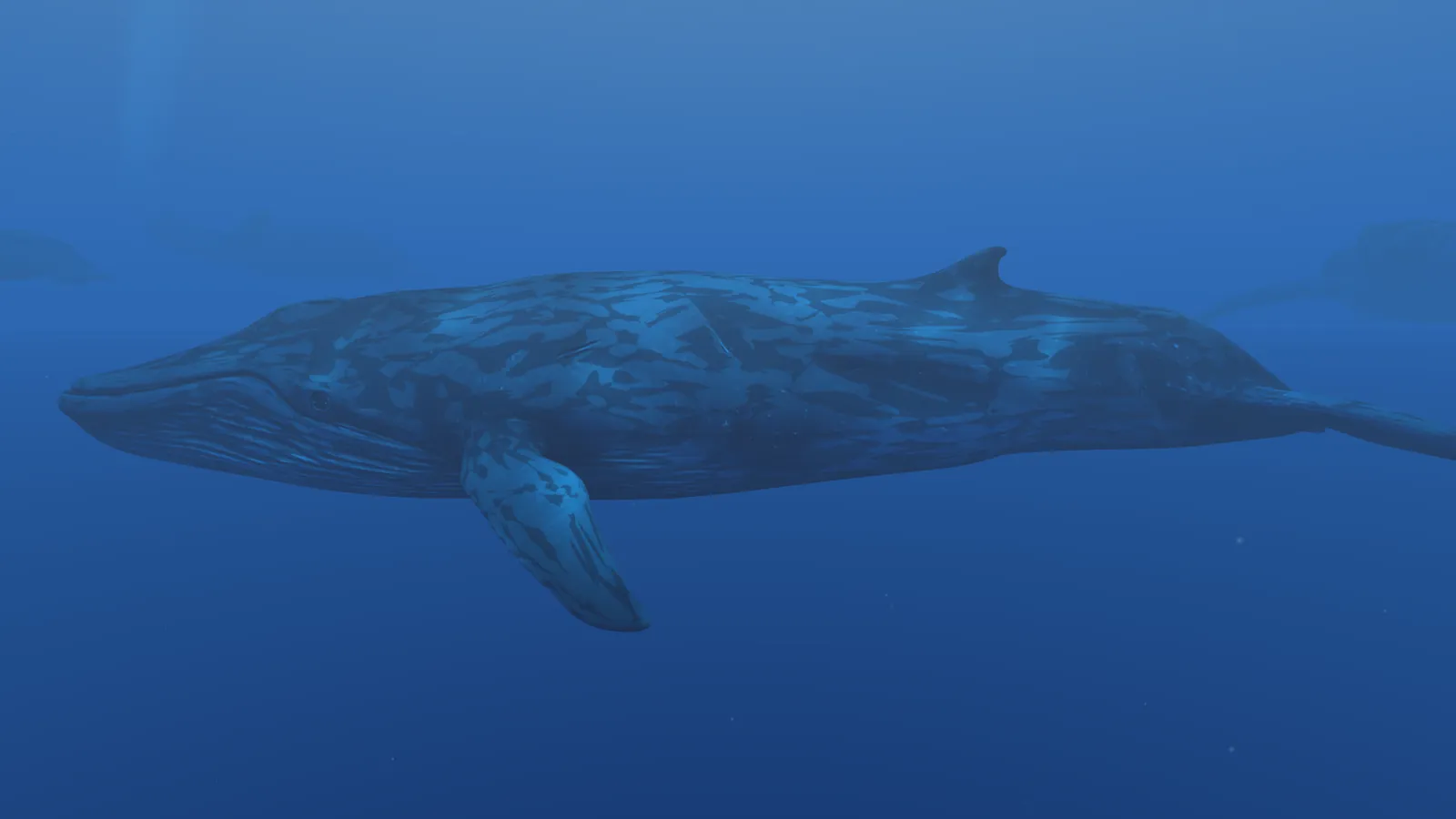
24 m
The herd's companion, which sometimes overtakes close beside you, its eye following you.